Chimney Rebuilding & Restoration • Shaker Heights, Ohio

When Spot Repairs No Longer Make Sense, Restore the Chimney Properly

Years of moisture, mortar loss, spalling brick and repeated patching can eventually push a chimney beyond the point where another small repair is practical.

CrownStone Chimney Solutions provides chimney rebuilding and masonry restoration for older homes throughout Shaker Heights and Cleveland’s East Side, with a focus on preserving the scale, character and visible masonry appearance of the original home.

Rebuilding should be based on extent, not fear.
The goal is to preserve sound masonry and rebuild only what has deteriorated beyond a practical repair scope.
When Does a Chimney Need Rebuilding?

The Difference Is Usually How Widespread the Damage Has Become

A few bad mortar joints are not the same as an upper stack with widespread brick and mortar failure.

01
Localized deteriorationOften better suited to tuckpointing, brick replacement or targeted masonry repair.
02
Widespread mortar lossWhen joints are failing throughout large sections, piecemeal repair may stop making sense.
03
Extensive brick damageLarge numbers of spalled, loose or fractured bricks can point toward partial rebuilding.
04
Movement or instabilityLeaning, separation or unstable upper masonry deserves a broader evaluation.
Restoration Goal

Replace the Failing Masonry Without Making the Chimney Look Like It Belongs on Another House

On older Shaker Heights homes, rebuilding is both a masonry project and an architectural project.

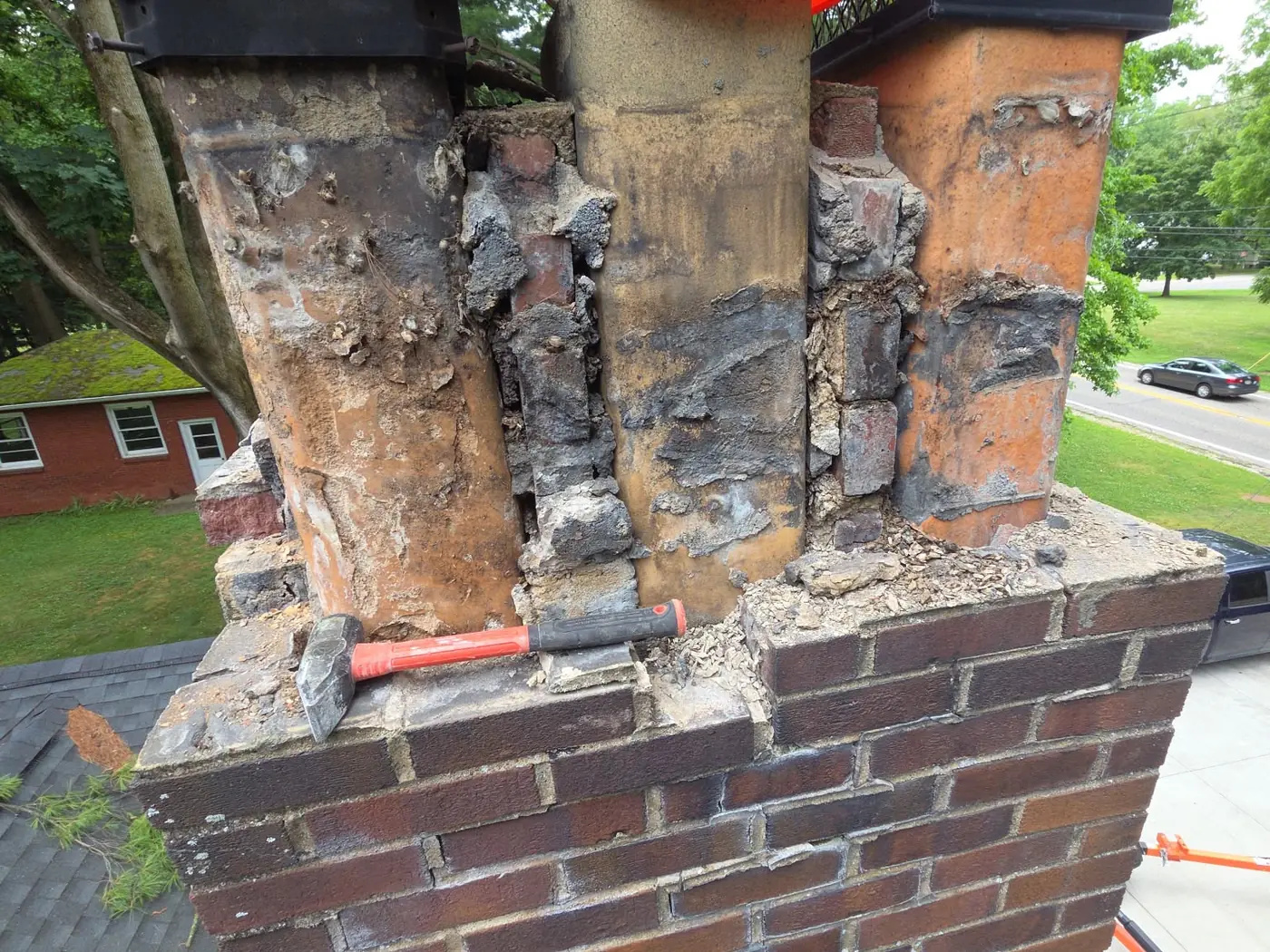
Badly deteriorated chimney top with exposed clay flue tiles and crumbling mortar awaiting repair
Before Restoration

Common Existing Conditions

  • Mortar joints recessed or missing
  • Multiple spalled or fractured bricks
  • Heavy patching from earlier repairs
  • Water staining and moisture damage
  • Crown deterioration at the top of the stack
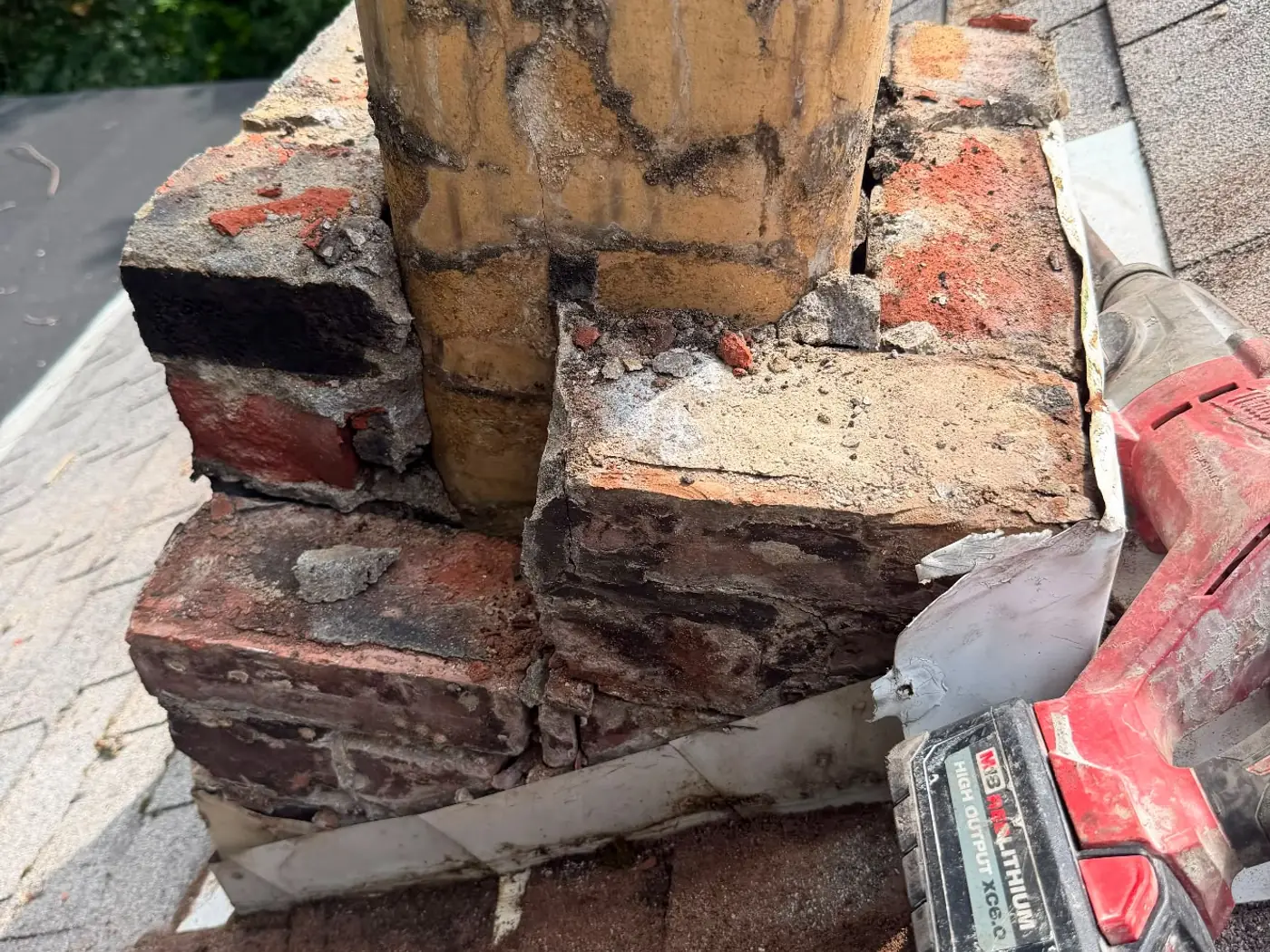
Partially rebuilt brick chimney with fresh masonry and tools on the roof mid repair
Restoration Objective

What the Finished Work Should Accomplish

  • Remove masonry that is no longer practical to retain
  • Rebuild affected sections in a stable configuration
  • Use brick and mortar appearance compatible with the home where practical
  • Address crown and water-management issues at the top
  • Leave the chimney visually coherent with the roofline
Repair or Rebuild?

Not Every Damaged Chimney Needs a Rebuild, and Not Every Chimney Should Be Patched Forever

The right answer depends on how much sound masonry is left and whether targeted repair would provide a sensible long-term scope.

Repair May Make Sense

When the Damage Is Still Localized

  • Mortar loss is limited to smaller sections
  • Only a few bricks need replacement
  • The main stack remains stable
  • The crown and leak source can be addressed separately
  • Most existing masonry remains worth preserving
Rebuilding May Make Sense

When the Deterioration Has Become Widespread

  • Large sections of mortar have failed
  • Many bricks are loose or heavily spalled
  • The upper stack has movement or instability
  • Repeated patching has not held up
  • Too little sound masonry remains for a practical localized repair
Levels of Chimney Rebuilding

Rebuilding Does Not Always Mean Taking the Entire Chimney Down

The scope can range from the top few courses to a much larger section depending on deterioration.

01

Upper-Course Rebuild

Rebuild the top courses when deterioration is concentrated near the crown and upper brickwork.

02

Partial Stack Rebuild

Remove and rebuild a larger section when damage extends beyond the uppermost courses but does not require full reconstruction.

03

More Extensive Restoration

When deterioration is widespread, a larger portion of the chimney may need to be reconstructed to restore a stable masonry stack.

Historic-Style Chimney Restoration in Shaker Heights

On Many Shaker Homes, the Chimney Is Part of the Architecture

Tall Tudor chimney stacks, brick Colonials and prominent roofline masonry are common throughout Shaker Heights.

That means a rebuild should not be approached as if the chimney were an isolated utility structure. Brick appearance, mortar color, joint profile, chimney dimensions and roofline proportions all affect how the finished work looks from the street.

CrownStone’s restoration approach is built around preserving the visual character of the existing home while addressing the actual masonry deterioration.

Local planning note

Depending on the scope and location of exterior work, local permitting or architectural review may apply. Homeowners should confirm project-specific requirements before construction begins.

BoulevardFernwayLomond LudlowMalvernMercer MorelandOnawaySussex
From Shaker Square to Van Aken
Prominent chimneys are a defining feature on many East Side homes, making thoughtful restoration especially important.
Our Rebuilding Process

A Restoration Project Should Start With Scope, Not Demolition

01

Evaluate the Deterioration

Determine how much masonry remains serviceable and where widespread failure begins.

02

Define the Rebuild Limit

Decide whether the project is upper-course, partial-stack or more extensive restoration.

03

Rebuild the Masonry

Remove unsound sections and reconstruct the affected area with attention to stability and appearance.

04

Finish the Top Properly

Address crown, cap and related water-management details so the newly rebuilt masonry is not left exposed to the same problems.

Why Chimneys Reach the Rebuild Stage

Water + Time + Freeze-Thaw Exposure Can Turn Local Damage Into Widespread Deterioration

Exterior masonry above the roofline takes direct exposure year after year. When crowns crack, mortar opens or brick begins absorbing more moisture, repeated Northeast Ohio weather cycles can gradually expand the repair area.

Water EntryCracks and open joints allow deeper moisture penetration.
Freeze-ThawWet masonry is repeatedly exposed to freezing and thawing conditions.
Surface LossBrick faces and mortar joints can deteriorate more visibly over time.
Expanded ScopeWhat began as a local repair can eventually affect larger sections of the chimney.
Chimney Rebuilding FAQs

Questions Shaker Heights Homeowners Ask Before a Major Masonry Project

Clear answers about partial rebuilds, full restoration and when rebuilding is actually necessary.

Rebuilding is generally considered when deterioration is widespread enough that localized brick or mortar repairs would leave too much unsound masonry in place. The extent of damage, stability and condition of the remaining stack all matter.
No. Many projects involve rebuilding only the upper courses or a partial section of the chimney. The scope should stop where sound, serviceable masonry begins.
The goal should be to use compatible brick appearance, mortar color and joint style where practical so the rebuilt section looks coherent with the existing home.
Long-term moisture exposure, crown failure, deteriorated mortar, spalling brick and repeated freeze-thaw cycles can all contribute to widespread masonry deterioration over time.
Sometimes. When mortar deterioration is caught while the brick and larger stack remain stable, tuckpointing and localized repair may preserve the chimney and delay or avoid broader reconstruction.
If the crown is deteriorated or the upper chimney is being rebuilt, the crown should be evaluated as part of the overall project so the restored masonry is properly protected from above.
A partial rebuild removes and reconstructs only the deteriorated section of the chimney while retaining the lower masonry that remains sound and serviceable.
Requirements can vary by project scope and property. Homeowners should confirm current Shaker Heights permitting and architectural-review requirements for their specific work before construction begins.
Yes. CrownStone Chimney Solutions serves Shaker Heights and nearby Cleveland East Side communities, with a focus on older residential brick and masonry chimney systems.
Restore the Chimney Without Losing the Character of the Home

Need Chimney Rebuilding or Restoration in Shaker Heights?

If years of mortar loss, spalling brick, water damage or repeated patching have pushed the chimney beyond a sensible spot-repair scope, CrownStone Chimney Solutions can help determine whether an upper-course rebuild, partial rebuild or broader restoration is appropriate.